

For many homeowners, the garage floor is one of the last unfinished surfaces in the home. Stains, cracks, dust, and worn concrete can make the entire space feel neglected, even when the rest of the garage is clean and organized.
That’s where professional garage flooring systems come into focus. Homeowners often hear terms like epoxy vs polyaspartic, but the differences between these systems are not always clear. Understanding how these coatings work together helps explain why some floors last for years while others fail much sooner.
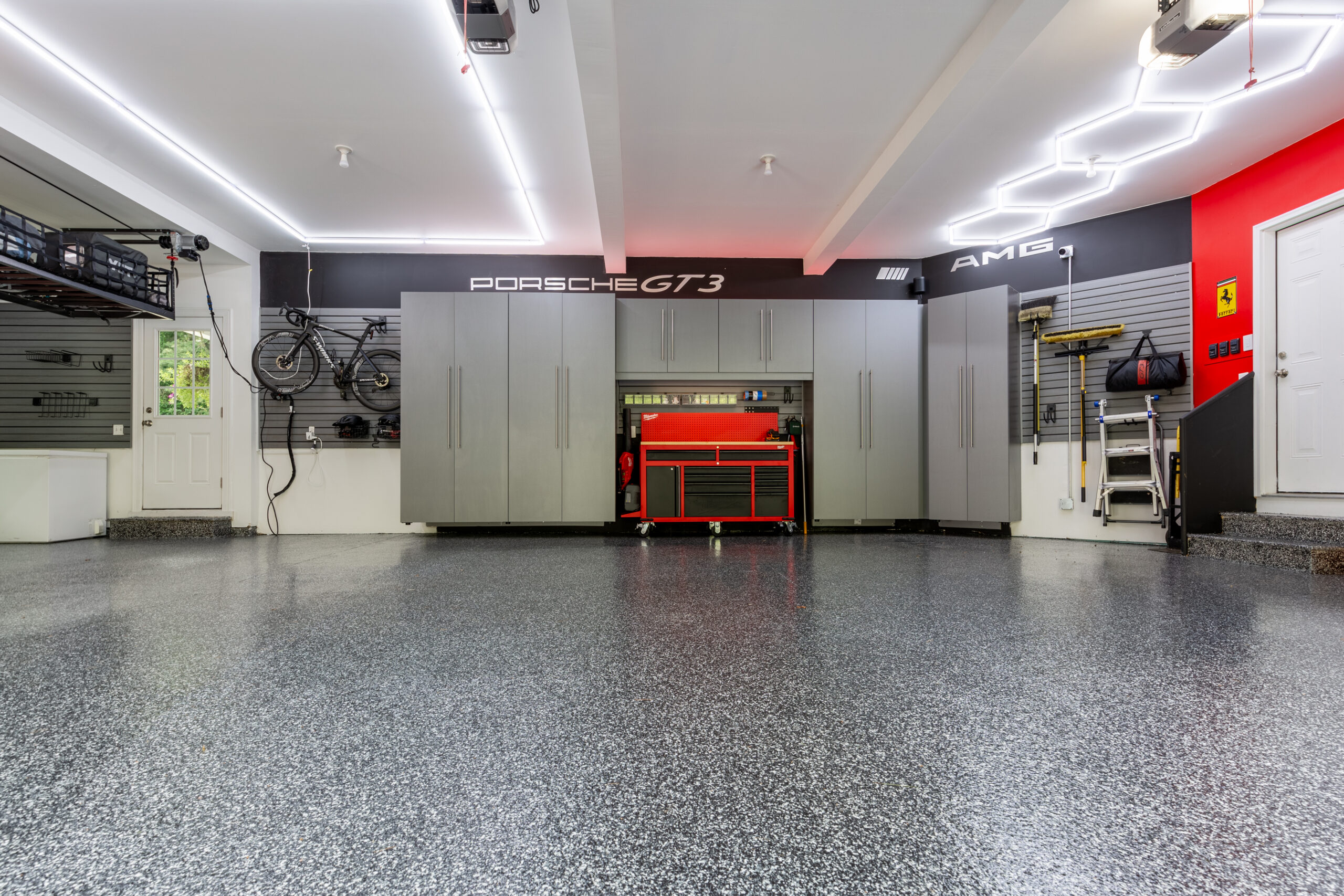
A well-built garage flooring system is not just a single product. It is a layered approach that combines strength, protection, and proper installation.
What a Garage Flooring System Actually Is
A garage flooring system is a multi-layer coating designed to bond to the concrete, protect the surface, and create a durable, finished floor.
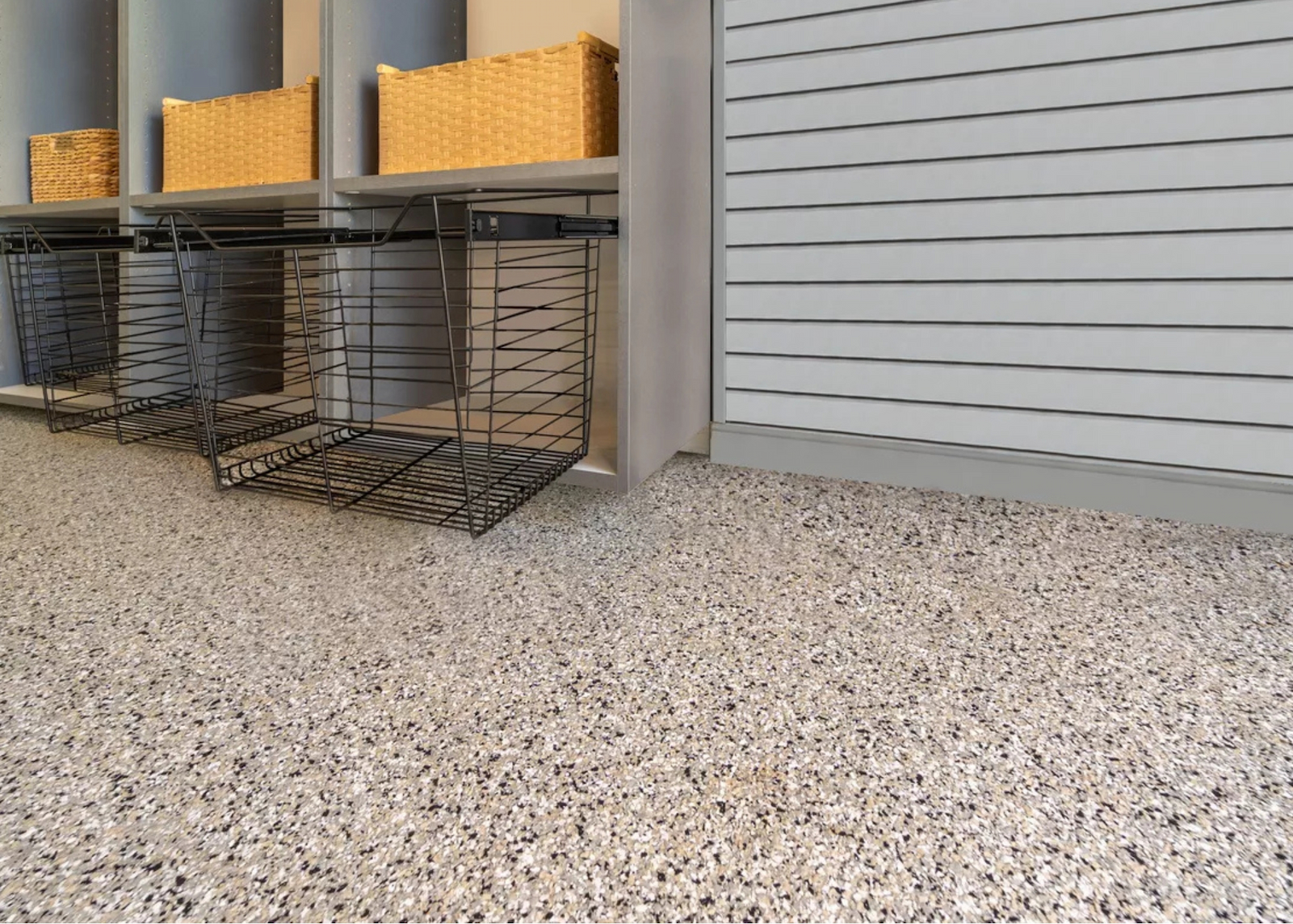
Most professional garage flooring systems use more than one material. Each layer serves a specific purpose, which is why the structure of the system matters just as much as the products themselves. When the layers are designed to work together, the floor performs more consistently over time.
The Role of Epoxy in Garage Flooring
Epoxy forms the base layer of many professional epoxy garage floor systems because it creates a strong bond with the concrete.
This bond is important because it anchors the coating directly to the slab. When the concrete is properly prepared, the epoxy layer becomes part of the surface rather than just sitting on top of it.
That strong connection helps the floor resist peeling, lifting, or separating from the concrete. It also provides the structural foundation that supports vehicle traffic, storage weight, and everyday use.
In most professional epoxy garage floor systems, epoxy is not the final layer. It is the base that gives the entire system its strength.
What Polyaspartic Garage Floor Coatings Add to the System
A polyaspartic garage floor coating is typically used as the protective top layer of a garage flooring system.
While epoxy provides strength and adhesion, polyaspartic adds surface protection. This topcoat helps guard the floor against sunlight, chemicals, moisture, and daily wear.
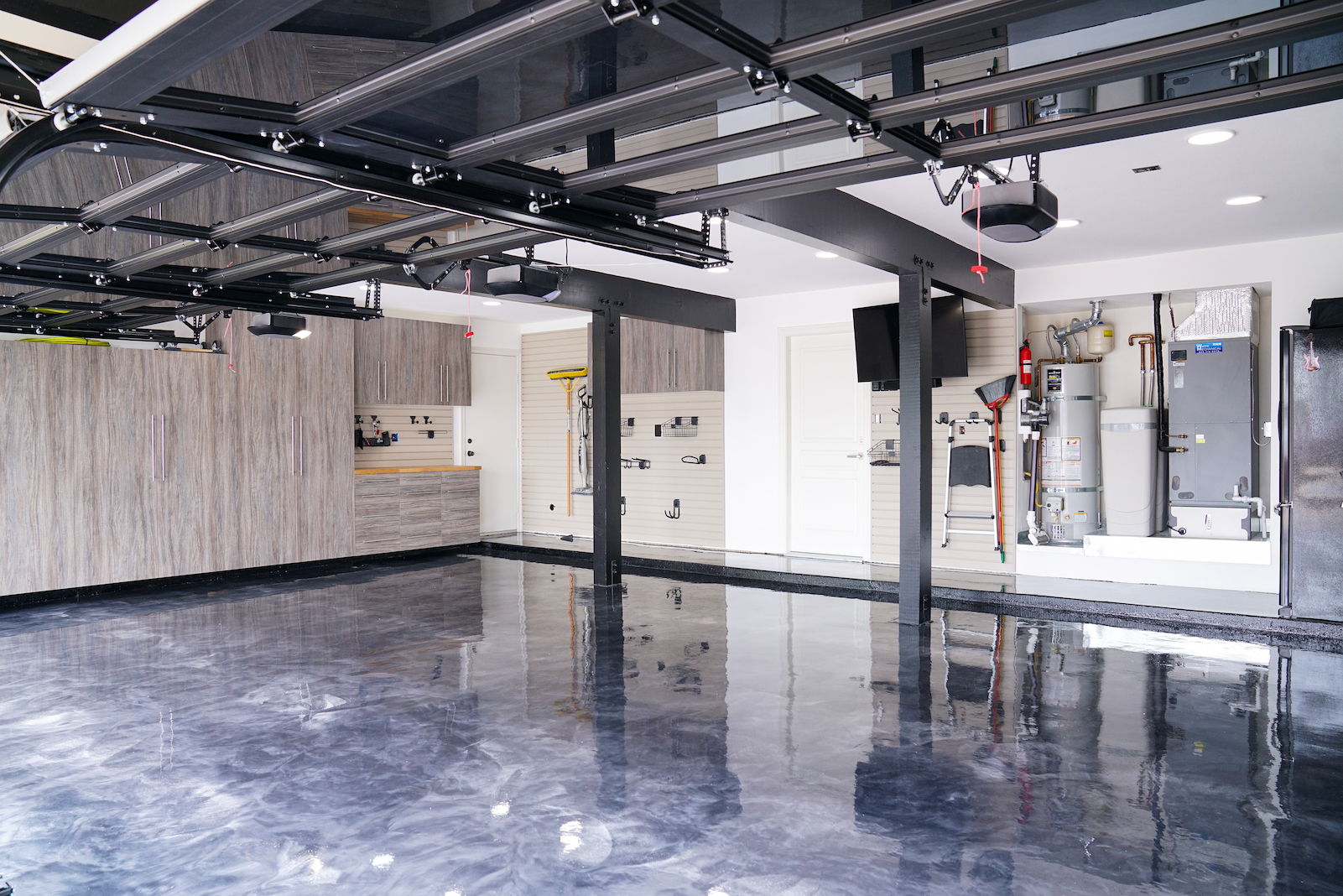
For example, UV exposure can cause some coatings to yellow or fade over time. A polyaspartic garage floor topcoat helps prevent that, keeping the floor looking consistent year after year.
It also creates a harder, more stain-resistant surface, which makes the garage easier to clean and maintain.
Why Hybrid Systems Outperform Single-Layer Floors
Hybrid garage flooring systems combine an epoxy base layer with a polyaspartic topcoat.
This approach works because each material handles a different job. Epoxy provides the bond and structural strength, while polyaspartic provides surface protection and durability. This is the main difference in most epoxy vs polyaspartic comparisons.
When a floor relies on only one material, it often has to compromise. Some coatings bond well but do not resist sunlight. Others cure quickly but do not provide the same long-term adhesion.
A hybrid garage flooring system avoids those trade-offs by using each material where it performs best. The result is a floor that is stronger, more stable, and better protected over time.
Why Installation Matters as Much as the Coating Itself
Even the best garage flooring systems depend on proper installation.
Concrete preparation is one of the most important steps in the process. The surface must be cleaned, repaired, and mechanically profiled so the coating can bond correctly. Without proper preparation, even high-quality materials can fail prematurely.

Layer thickness, curing times, and consistent application also play a major role in long-term performance. A well-installed system tends to remain smooth, stable, and easy to maintain for years.
This is why professional garage flooring systems are built as complete processes, not just single-day coatings.
Choosing the Right Garage Flooring System
Most homeowners are not looking for the most technical solution. They simply want a garage floor that looks clean, holds up to daily use, and stays that way over time.
Understanding the basic structure of a garage flooring system makes it easier to compare options. Instead of focusing only on the name of the coating, it helps to look at how the entire system is built.
For homeowners who want to explore what that looks like in their own space, a professional design consultation can help clarify the right garage flooring system based on the condition of the concrete, how the garage is used, and the goals for the finished space.
