


When a garage floor coating peels, chips, or wears out too early, most people assume the coating itself was the problem. Sometimes that is true. But in many cases, failure starts earlier, either with the condition of the concrete, the type of system being used, or the way the product was mixed and applied.
That is what makes this topic easy to oversimplify. Garage coating failure is rarely caused by just one thing. It usually comes down to a chain of decisions that affect how well the system bonds, cures, and holds up over time.
If you want to understand why garage floor coatings fail, you have to look at the full picture behind any garage floor coating system.
1. The Concrete Was Never Properly Prepared
One of the most common reasons garage floor coatings fail is that the concrete was not properly prepared before the coating went down.
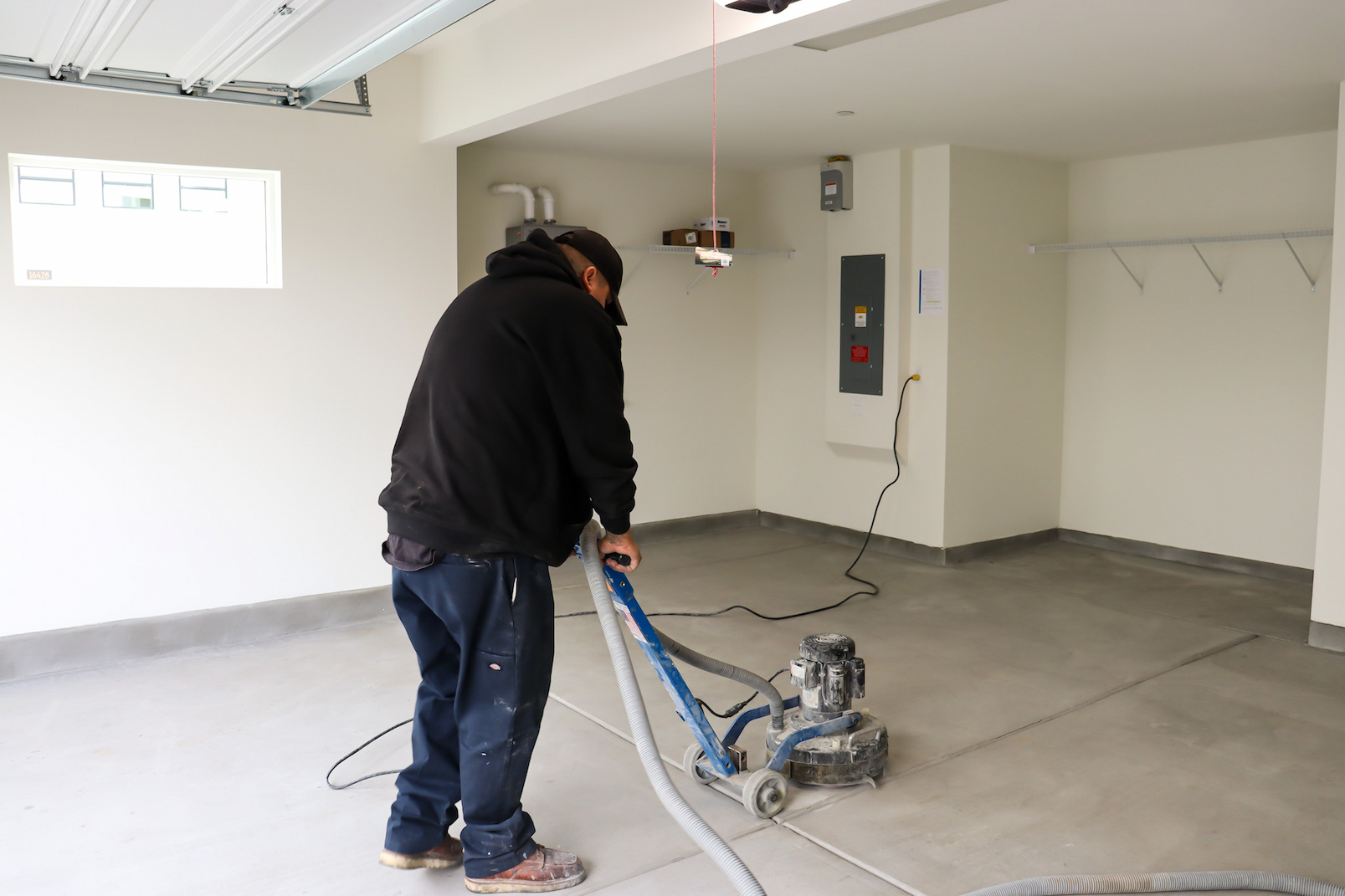
A garage floor epoxy system needs more than a quick cleaning. The surface has to be mechanically opened up so the coating can bond to the concrete instead of simply sitting on top of it. That is why machine grinding matters. It removes surface contamination, opens the pores of the slab, and creates the profile needed for strong adhesion.
If that preparation is rushed or incomplete, the coating starts with a weaker foundation. It may still look good at first, but over time that weak bond can lead to peeling, lifting, or early wear.
2. Cracks and Surface Damage Were Left Untreated
A coating can protect concrete, but it cannot correct unresolved damage underneath it.
If the slab has cracks, chips, or broken areas that are not properly repaired first, those weak points remain part of the finished floor. Over time, they can affect both the look of the surface and the integrity of the system above it.
That is why crack repair should not be treated like a minor detail. Before coating begins, damaged areas need to be repaired with crack and joint filler designed to create a smoother, more stable surface. That step helps the coating bond more consistently and reduces the risk of failure at stressed areas of the slab.
3. The Coating System Was Too Weak for the Job
Not all garage coating systems are built the same.
Some systems rely too heavily on a single product or a thinner application that simply does not provide enough long-term protection. That is one reason an epoxy garage floor can look good at first but wear down faster when it is exposed to impact, moisture, UV exposure, and everyday use.
That is why system design matters so much. A stronger coating system is not just about appearance. It is about building enough protection into the floor so it can actually perform in a garage environment.
This is also where hybrid systems have an advantage. When different coating layers are used for different purposes, such as bond strength below and protection above, the floor tends to hold up better than a system trying to make one layer do everything.
4. The Product Was Mixed or Applied Incorrectly
Even a good coating can fail if it is not handled correctly during installation.
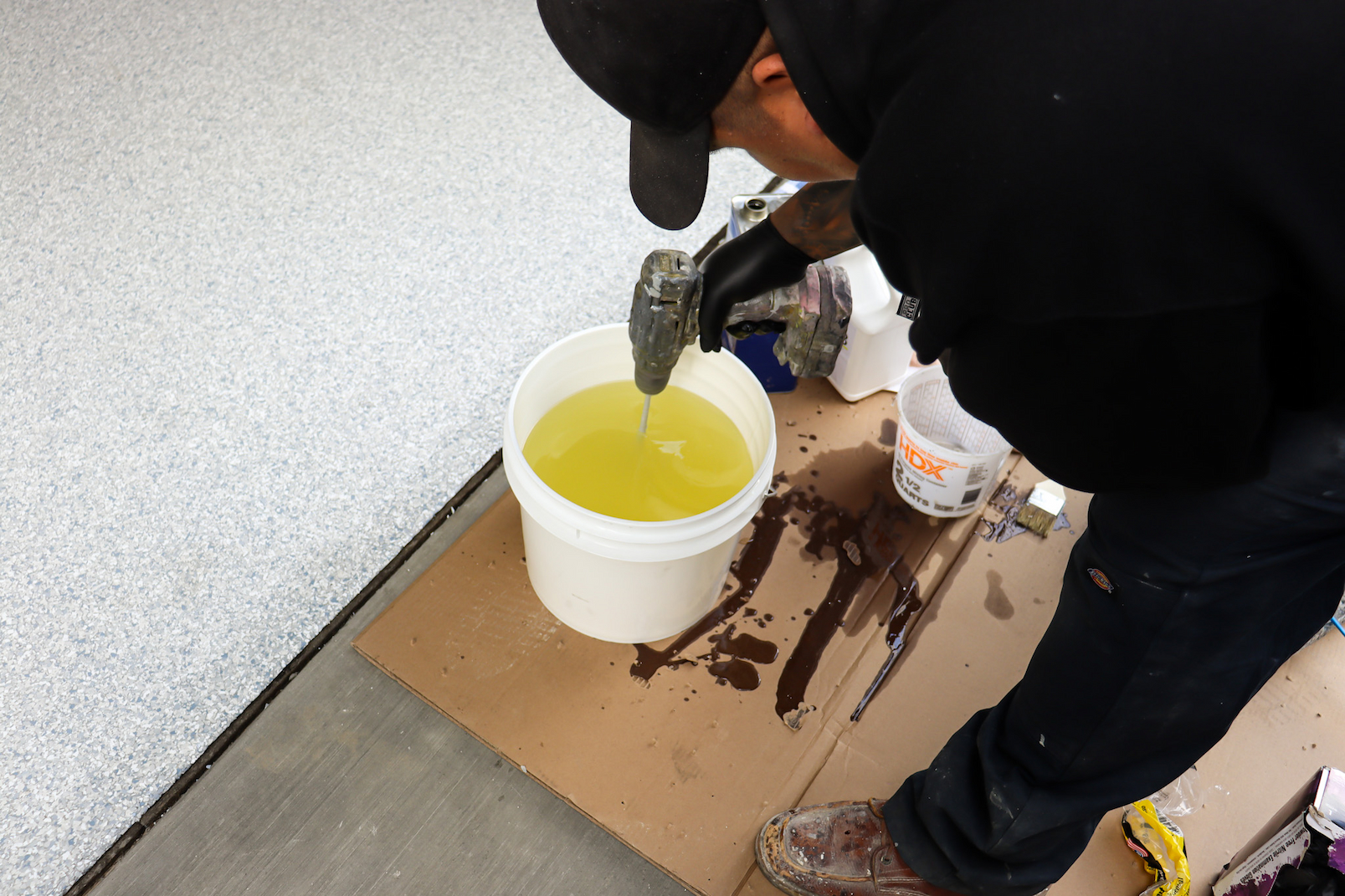
Garage coating products have to be mixed in the correct ratios and applied with the right timing. Temperature, humidity, and working time all affect how the material behaves once installation begins. If the ratios are off, if the product is applied too slowly, or if environmental conditions are not being accounted for, the coating may not cure or bond the way it should.
This is one of the biggest differences between simply putting a coating on a floor and installing a system properly. The material itself matters, but so does how accurately it is mixed, timed, and applied.
5. The Installation Was Rushed
Another common reason garage floor coatings fail is that the full process was pushed too quickly.
A coating system performs best when each step is given the time and attention it requires. Surface prep, repairs, product mixing, layer consistency, and cure timing all matter. If speed becomes the priority, the quality of the installation usually suffers somewhere.
That does not always show up right away. In many cases, rushed work still looks acceptable on day one. The problems start showing later, once the floor is exposed to heat, traffic, moisture, and daily use.
This is why coating failure is often delayed. What looks like a product problem six months later may actually be the result of shortcuts taken on installation day.
Why Proper Preparation Still Matters Most
There are several reasons garage floor coatings fail, but preparation still sits at the center of the conversation.
That does not just mean grinding the floor. It means understanding the concrete, repairing damage correctly, using the right system for the space, and applying the product with the consistency and discipline it requires.
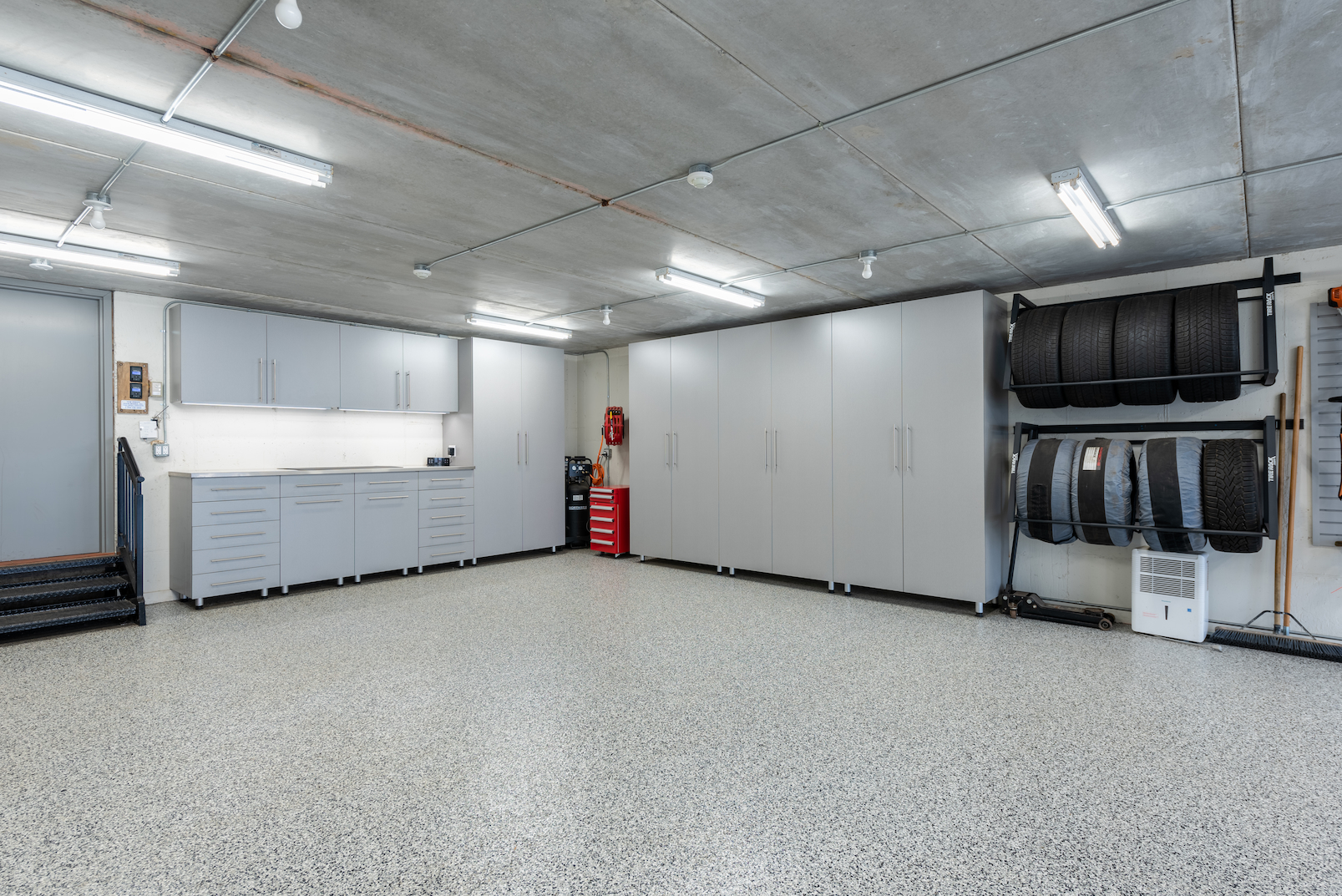
In other words, coating failure usually starts before the visible failure ever appears.
For homeowners comparing options, the question is not just what coating is being used. It is whether the floor is being prepared, repaired, and installed the right way from the start.
