

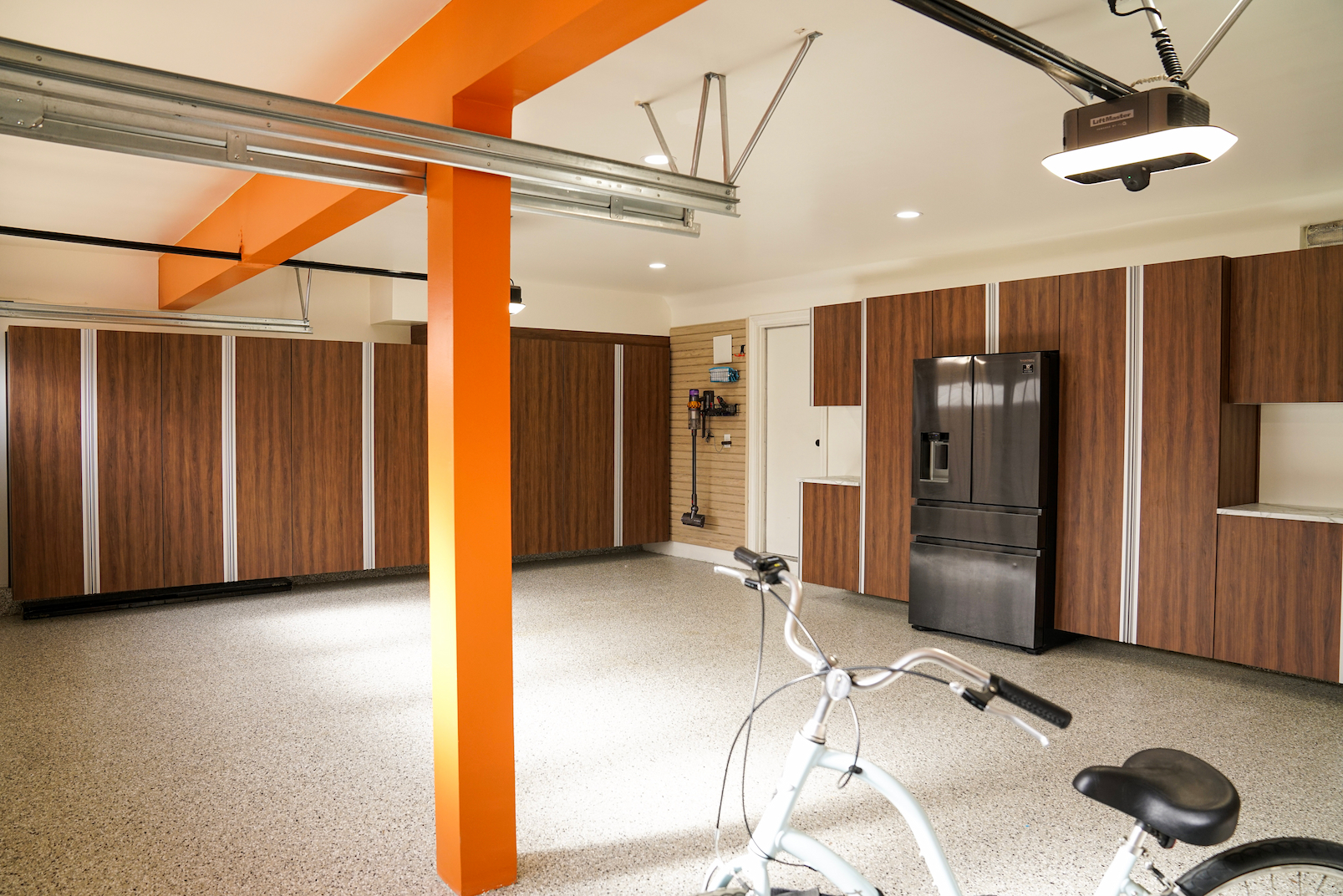
Garage cabinets have to perform in a very different environment than cabinetry inside the home. They are exposed to moisture, temperature changes, heavier storage loads, repeated impact, and the kind of daily wear that comes from an active garage.
That makes material selection a major part of garage cabinet quality. The surface finish, cabinet core, edge treatment, and shelf construction all affect how well the system holds up over time.
Two of the most common materials used in garage cabinet construction are thermally fused laminate and melamine. When comparing thermally fused laminate vs melamine, homeowners should understand how each material performs as part of a garage cabinet system. Understanding the difference between them can help avoid durability issues, finish problems, and cabinet performance concerns down the line.
Why Garage Cabinet Material Matters
The material used in a garage cabinet affects how the entire system performs over time. It influences how well the cabinet holds its shape, how securely hardware stays attached, how clean the finish remains, and how well the edges resist chipping or peeling.
This is where material choice becomes more than a design preference. A cabinet can look clean when it is first installed, but the real test is whether the surface, core, shelves, and edges continue to hold up after years of regular use.
That is why the conversation around garage cabinet materials should go beyond color and style. Before comparing finishes, homeowners should understand what the cabinet is made from and how that material is expected to perform inside a garage.
What Is Thermally Fused Laminate
Thermally fused laminate, often called TFL, is created when a decorative resin-saturated surface layer is fused directly to an engineered wood substrate using heat and pressure.
The key difference is in the bond. With TFL, the surface becomes part of the finished panel rather than applied on top of it. That creates a durable finish designed to resist scratching, moisture, and daily wear while helping protect the core underneath.
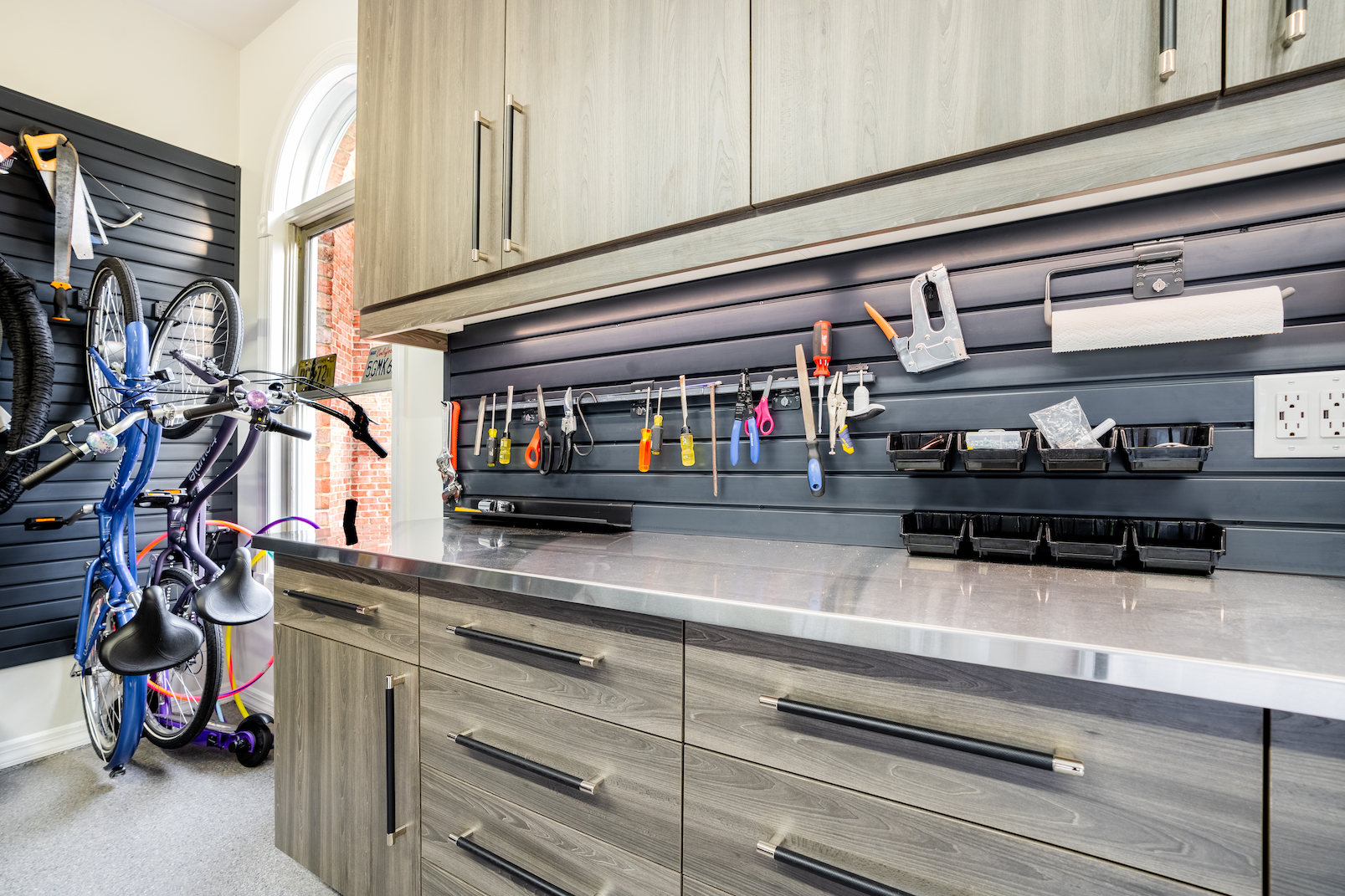
At Premier Garage, our cabinets use thermally fused laminate because it provides the durability needed for a working garage environment without sacrificing a clean, finished appearance.
This makes thermally fused laminate cabinets a strong choice for garage spaces where performance matters as much as appearance.
What Is Melamine
Melamine is a resin-based decorative surface commonly used on cabinet panels. It can create a clean, finished appearance, but its long-term performance depends on the thickness of the surface, the quality of the application, and how well the edges are protected.
In lower-cost garage cabinet systems, the issue is often how thin or brittle the finished surface becomes once it is exposed to real use. Edges are especially vulnerable. This is one reason melamine garage cabinets can become more prone to cracking, peeling, chipping, and visible wear when edge protection is weak.
In a garage, that matters. Moisture, heavier storage, repeated impact, and regular use can expose those weaknesses faster than they would inside the home.
Why the Core Underneath Matters
While the surface finish helps protect against scratches, moisture, and visible wear, the core underneath determines much of the cabinet’s strength and stability.
Particle board is often used as the substrate in lower-cost melamine cabinet systems. When that particle board is lower density or poorly protected, it can become more susceptible to moisture, sagging, and hardware loosening over time.
With thermally fused laminate, the finished surface is bonded directly to an engineered wood substrate. That bond helps create a more stable cabinet panel, protecting the core from the kind of surface breakdown that can lead to swelling, edge damage, or loss of strength over time.
A stronger engineered wood core also helps the cabinet hold its shape, support heavier storage, and keep hardware securely fastened. That matters in a garage, where shelves, doors, hinges, and drawer slides are placed under more stress than they typically would be inside the home.
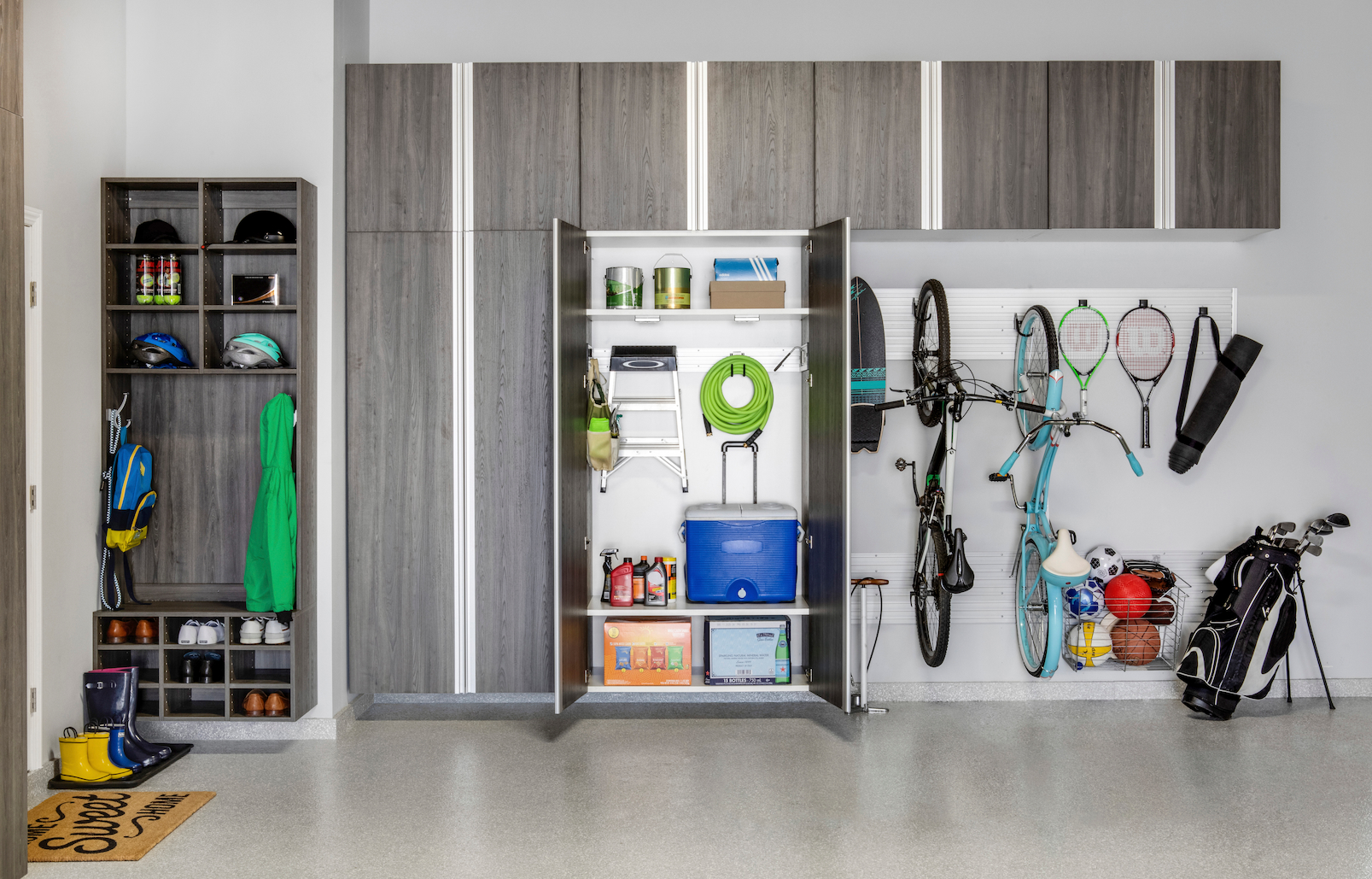
This is why the surface and the core need to be evaluated together. A durable surface performs best when it is bonded to a stable core built for real use.
Choosing the Right Cabinet Material for a Garage
Once the surface and core are understood together, it becomes much easier to compare garage cabinet materials accurately.
Thermally fused laminate and melamine may both create a finished cabinet surface, but they are not equal in how they are typically built or how they perform over time. In a garage, where moisture, repeated use, and heavier storage can expose weak points faster, that difference matters.
For homeowners investing in custom garage cabinets, thermally fused laminate with a quality engineered core offers stronger long-term protection than lower-cost melamine systems paired with weaker particle board.
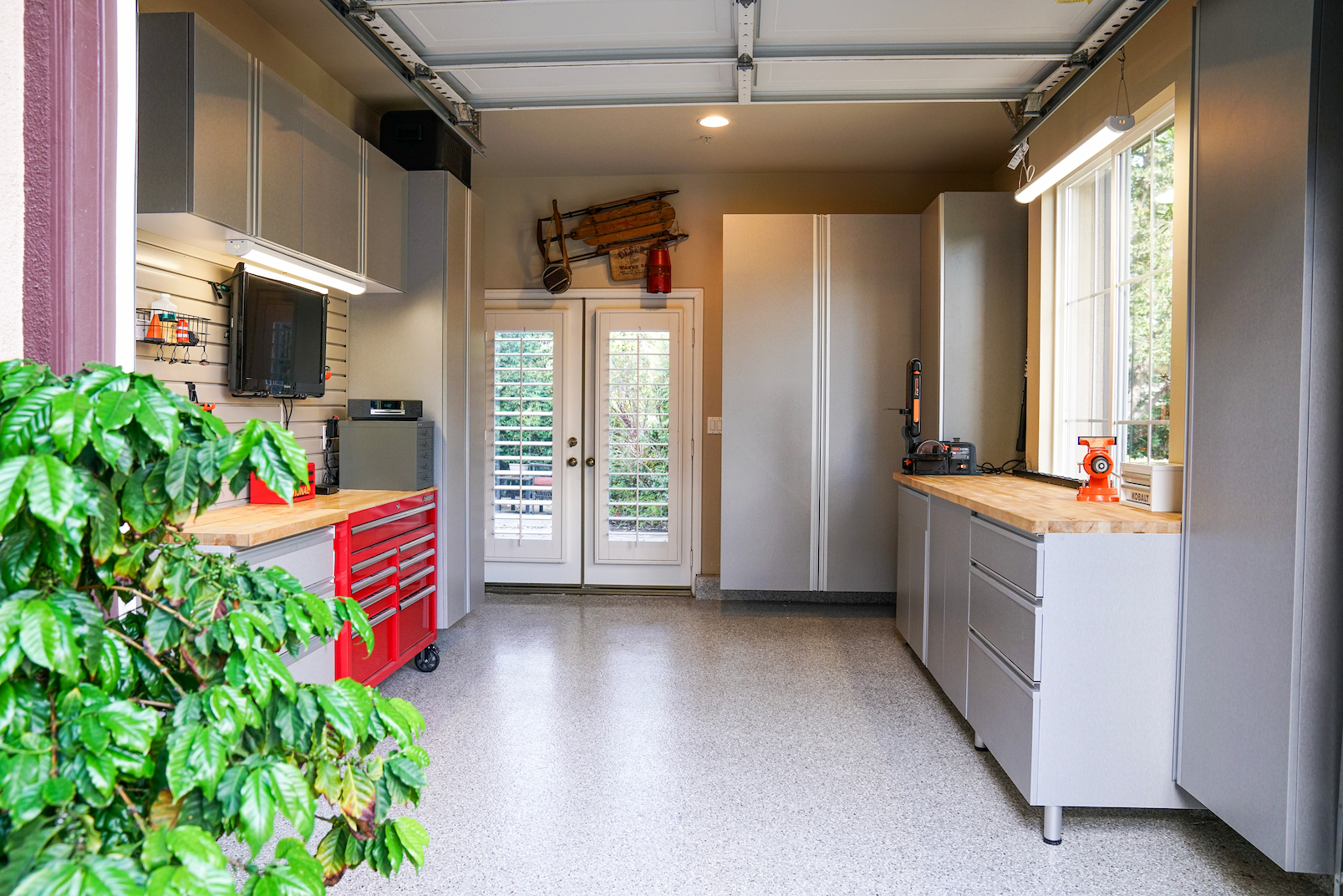
The right garage cabinet material should do more than look clean on installation day. It should protect the cabinet, support long-term durability, and continue performing inside an active garage for years to come.
