

For many homeowners, the garage floor reaches a point where it can no longer be ignored. Cracked concrete, oil stains, moisture marks, or constant dust make the space feel unfinished, even when the rest of the garage is well organized.
That’s often when garage floor epoxy enters the conversation. It’s one of the most talked-about garage flooring solutions, but it’s also one of the most misunderstood. Before deciding whether epoxy is right for your garage, it helps to understand what the term actually means and what factors truly affect long-term performance.
What People Usually Mean When They Say “Epoxy Garage Floor”
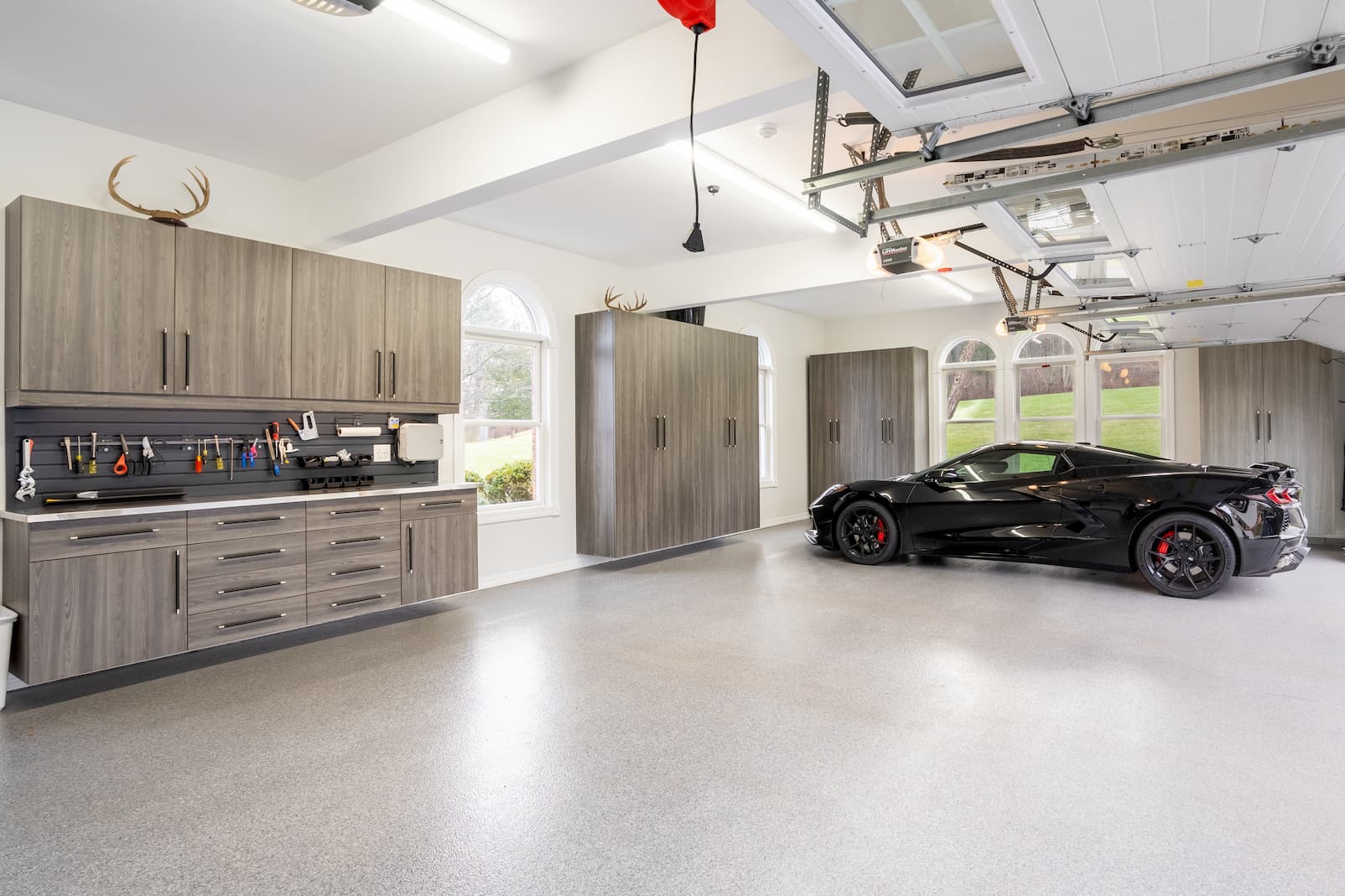
When homeowners talk about an epoxy garage floor, they’re usually referring to a resin-based coating applied over concrete to create a smooth, durable surface. At a basic level, epoxy is designed to bond to the concrete and create a protective layer over the floor.
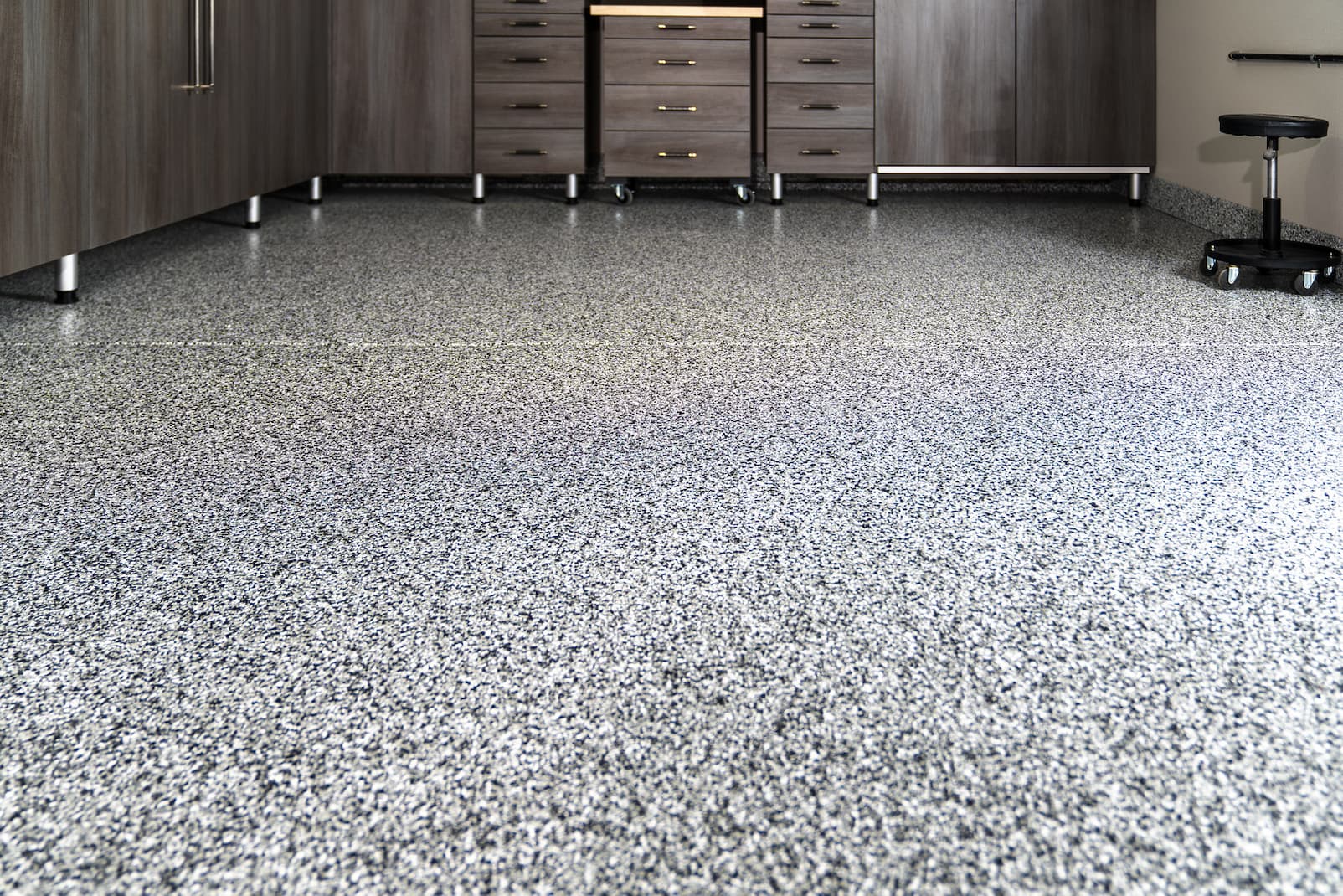
What’s important to understand is that “epoxy” is not a single product or outcome. Two garages can both be described as epoxy floors and perform very differently over time. The difference almost always comes down to how the floor is prepared, how the system is built, and how it’s installed.
Why Epoxy Is One of the Most Popular Garage Flooring Options
There’s a reason epoxy continues to be one of the most popular garage flooring options. When done correctly, it offers several practical benefits that homeowners value.
An epoxy garage floor creates a clean, finished appearance that instantly elevates the space. It helps reduce concrete dust, making the garage easier to maintain. Epoxy also provides resistance to common garage contaminants like oil, moisture, and road debris, which can otherwise stain or damage bare concrete.
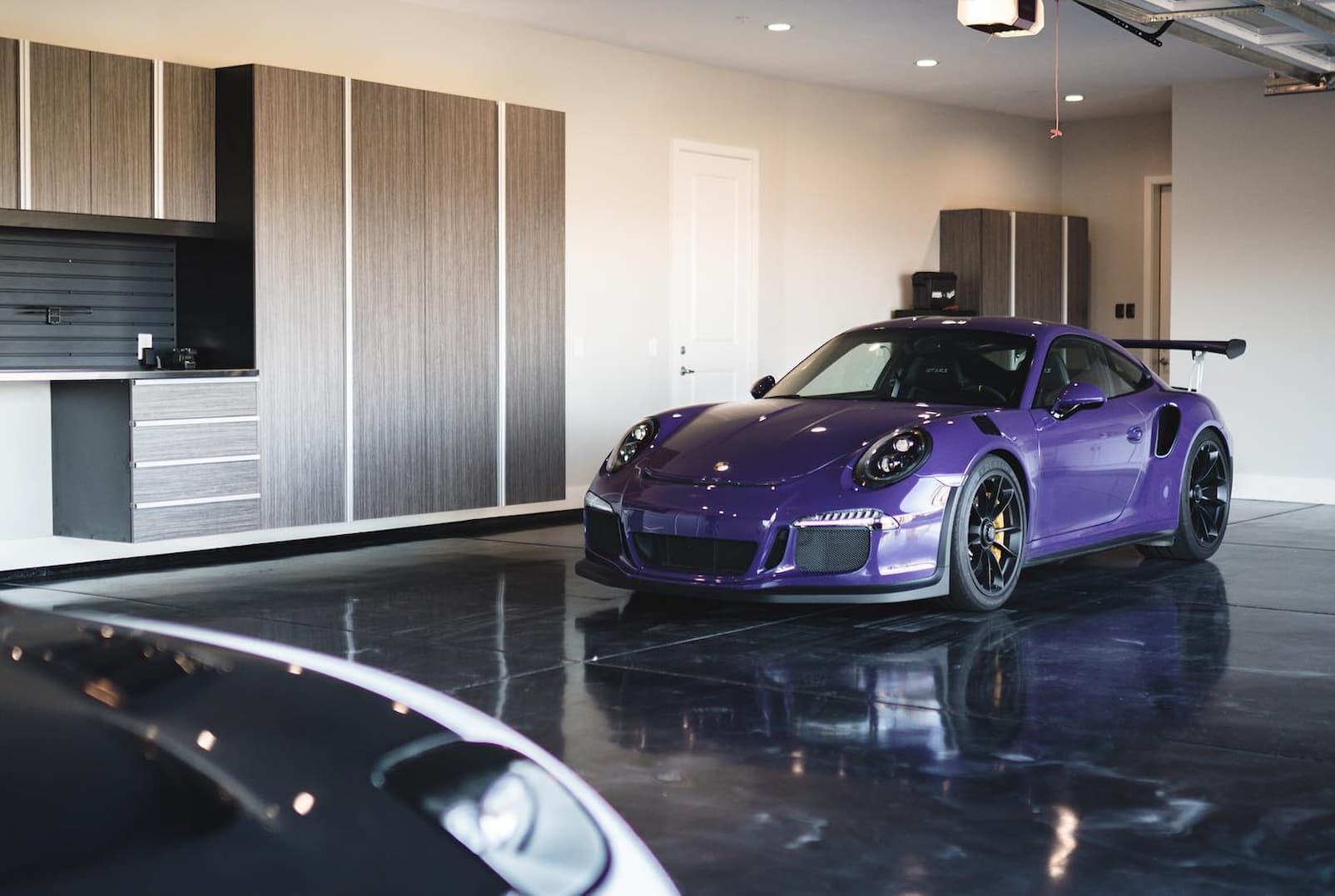
For many homeowners, epoxy strikes a balance between durability, appearance, and everyday usability.
Understanding What Epoxy Does Well — and Where It Has Limits
Like any flooring solution, epoxy has strengths and limitations. One of its biggest advantages is its ability to form a strong bond to properly prepared concrete, creating a durable base layer that can hold up to vehicle traffic and regular use.
At the same time, the epoxy garage floor durability people expect depends heavily on how the floor is installed. Issues often blamed on epoxy itself are more accurately the result of inadequate preparation or poorly designed systems. Epoxy is not a shortcut solution, and its performance is closely tied to the quality of the work behind it.
What Actually Determines How an Epoxy Garage Floor Performs
Several factors play a role in how well an epoxy floor performs over time. Concrete preparation is one of the most important. Proper surface profiling allows the epoxy to bond correctly, while moisture considerations help prevent future failures.
Coating thickness, the presence of protective top layers, and consistent installation standards also matter. These elements work together as a system, which is why professional epoxy garage floor preparation and installation are so critical to long-term results.
How to Evaluate Epoxy Options Without Getting Technical
Homeowners don’t need to become flooring experts to make a good decision. Asking the right questions goes a long way.
It’s reasonable to ask how the concrete is prepared before coating, whether the floor is designed for daily use and vehicle traffic, and how the surface is protected over time. Understanding what standards guide the installation process can also provide clarity when comparing options.
These conversations help ensure expectations align with real-world performance.

Taking the Next Step Toward a Finished Garage Floor
Epoxy can be an excellent foundation for a finished garage floor when it’s approached thoughtfully. Understanding how systems are built and installed is the next step in determining what makes sense for your space.
A professional consultation helps translate these considerations into a solution that fits the garage, the home, and how the space is actually used. From there, homeowners can move forward with confidence, knowing the floor is designed for both appearance and long-term performance.
